Volkswagen is a German automobile brand owned by the eponymous concern with headquarters in Wolfsburg. Engaged in the manufacture of cars and commercial vehicles, trucks, vans, as well as auto parts.
Founder Ferdinand Porsche
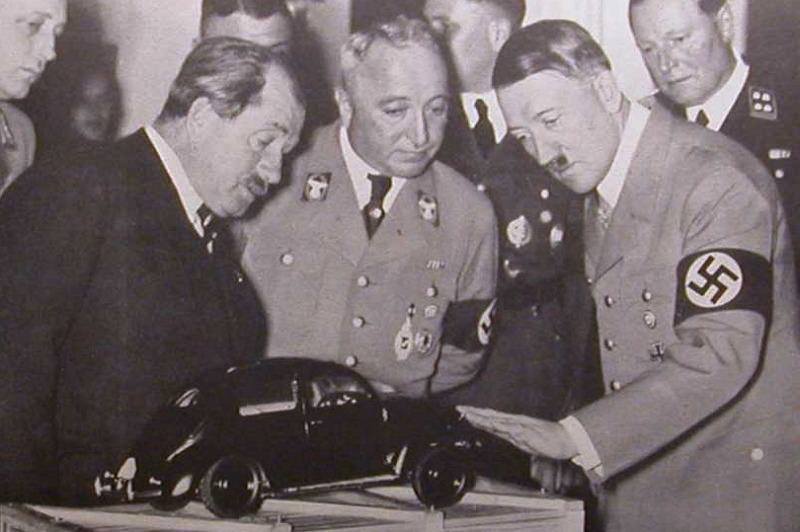
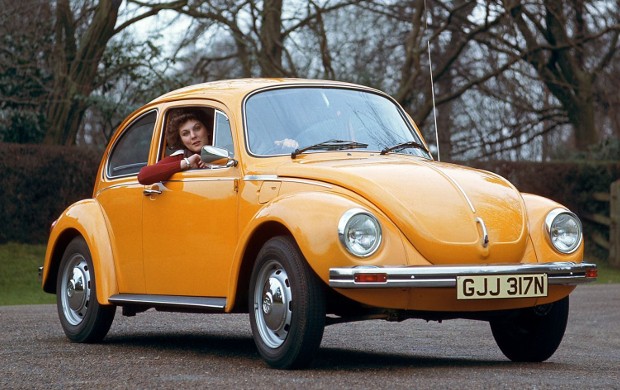
In 1934, Ferdinand Porsche (Ferdinand Porsche), a well-known German designer (founder of the world-famous German automobile company Porsche AG), received an order from the National Socialist Government of Germany to develop a modern passenger car. And already in 1935, such a car was mounted. He received the name "Volkswagen", which literally translated from German means "people's car." After two years of testing, the VW30 series was launched in 1937, and by 1938 the car had a familiar appearance for many generations. Volkswagen immediately appreciated by designers, engineers and drivers. They talked about him, numerous publications appeared, in 1938, in a New York Times article, Volkswagen was dubbed the “bug” for outward resemblance. This nickname has taken root so much that it has become a hallmark of the car.
HISTORY OF VOLKSWAGEN
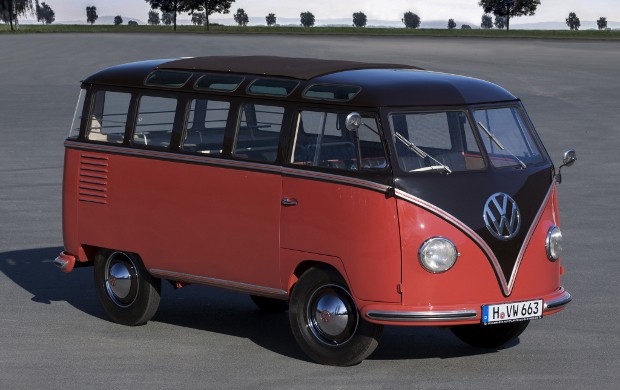
On May 26, 1938, the construction of a new plant began in Wolfsburg. Before the war began in 1939, only a few cars were assembled. With the outbreak of hostilities, production was redesigned for the production of military vehicles, such as the Kübelwagen (“car-pelvis”). He received an open four-door body with flat panels, a rear wheel gearbox, an interwheel limited-slip differential, an independent suspension of all wheels, a clearance of 290 mm and 16-inch wheels. Since March 1943, it was equipped with a 25-horsepower engine with a capacity of 1130 cm3. The air-cooled engine worked stably in all climates. The car was not afraid of bullets due to the lack of a radiator. The maximum speed was 80 km/h. After the war, the company's factories were badly damaged by bombing and fell into the British occupation zone. They organized repair and maintenance of military equipment at the remaining capacities. The enterprise had to be destroyed, since it was engaged in the production of military products and used slave labor. However, one of the officers of the British army drew a civilian vehicle manufactured at the enterprise and showed it at the headquarters of the English army. Thanks to this, the British government placed an order for 20,000 cars, and assembly began. By 1946, the plant was producing 1,000 cars a month, which was an excellent achievement, given that it was still in disrepair. The fate of the plant remained unclear for a long time. In 1948, Volkswagen became a symbol of the restoration of Germany. Its lineup has been replenished with a Volkswagen Type 2 commercial vehicle with an 1100 cc air-cooled engine mounted in the rear. In 1965, the brand released a version with a load capacity of 1000 kg instead of 750 kg, and then replaced the 1.2-liter engine with a 1.5-liter. Volkswagen introduced a new type of vehicle in the 1960s. They used a monocoque body, an optional automatic transmission, an electronic fuel injection system and powerful power plants. In 1971, the brand introduced the Super Beetle, which differs from the standard model using the MacPherson strut instead of the conventional torsion bar. 2-liter 1.5-liter engine. Volkswagen introduced a new type of vehicle in the 1960s. They used a monocoque body, an optional automatic transmission, an electronic fuel injection system and powerful power plants. In 1971, the brand introduced the Super Beetle, which differs from the standard model using the MacPherson strut instead of the conventional torsion bar.
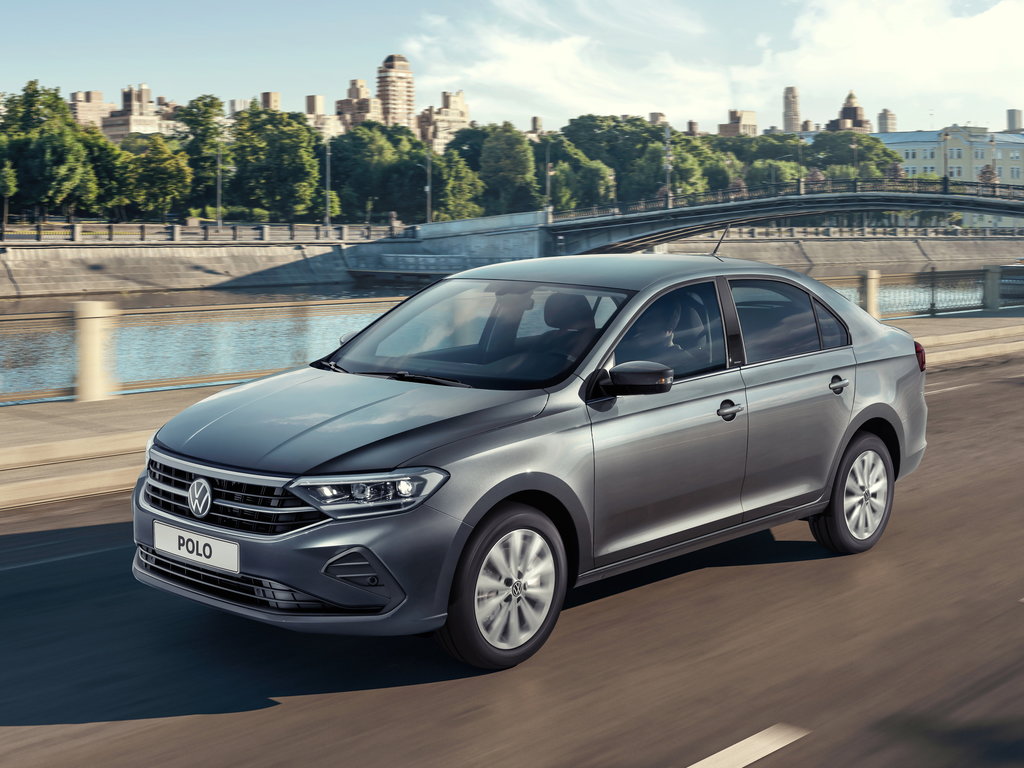
In 1999, the comfortable VW Bora, or Jetta, Golf-based sedan was launched. Automobile companies operating in Mexico, Brazil, Argentina and China assemble cars that differ from European ones. These are Parati, Gol, Santana, built on the basis of Golf and Passat of previous generations. In 2002, a luxury sedan - Phaeton - was released, which was remembered by the fact that it was the first among premium cars using the V6-TDI engine to comply with the European environmental standard Euro-5 in terms of emissions. The company is constantly developing in the field of improving fuel efficiency, receiving prestigious awards for its decisions. In 2002, the concept car of the future super-efficient Volkswagen XL1 was introduced. Everything in it served the purpose of reducing weight and improving aerodynamics. Instead of rear-view mirrors, cameras and electronic displays were used, the rear wheels are located close to each other to increase streamlining. The drag coefficient was 0.15. In 2009, the L1 debuted at the Frankfurt Motor Show. It was equipped with a hybrid powerplant with a 0.8-liter TDI and an electric motor. The production version was introduced in 2013. It consumes 0.9 l / 100 km, emitting 21 g of CO2 per 1 km. He received the same 0.8-liter turbocharged diesel engine with 47 hp. and a 27-horsepower electric motor. Today, Volkswagen is the founder of the Volkswagen Group, a large international corporation owning the brands Audi, Seat, Lamborghini, Bentley, Bugatti, Scania, and Škoda. It is recognized as the largest European automobile manufacturer. Volkswagen plants are located in Germany, Mexico, Brazil, USA, India.